DC track circuits are a fundamental building block of modern railway signaling systems. Their primary purpose is to detect the presence of a train on a section of track. This seemingly simple function is crucial for ensuring safe train operations, as it provides the basis for preventing collisions and controlling train movements through signaling.
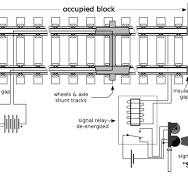
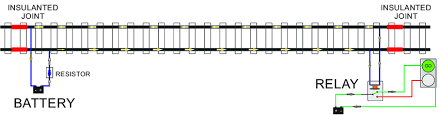
At its core, a DC track circuit utilizes the steel rails of the railway track as a part of an electrical circuit. The main power source is a low-voltage DC (Direct Current) power source is connected to the rails at one end of a defined track section, and a relay (an electromagnetic switch) is connected across the rails at the other end. This track section is electrically isolated from adjacent sections using insulated joints in the rails.
When the track section is clear (no train present), the DC current flows from the power source, through one rail, across the relay coil, and back through the other rail to complete the circuit. This current energizes the relay, causing its contacts to close or remain closed, indicating that the track section is unoccupied.
However, when a train enters the track section, its metal wheels and axles provide a low-resistance electrical path (a "short circuit") between the two rails. This short circuit diverts the majority of the DC current away from the relay coil. With insufficient current flowing through it, the relay de-energizes, causing its contacts to change state. This change in the relay's contacts signals that the track section is now occupied by a train.
DC track circuits can also be adapted to provide additional information beyond simple occupancy detection. By using different voltage levels, current characteristics, or by adding additional components, track circuits can be configured to detect broken rails or to transmit basic signaling information directly to the train.
In summary, the DC track circuit is a reliable and fail-safe method for detecting the presence of trains on a section of track. Its fundamental principle of using the rails as part of an electrical circuit to energize a relay provides a crucial input for railway signaling and safety systems.